
On November 24, 2025, the Second China-UK Anti Cancer Summit and the 2025 London Global Cancer Week - China Session was successfully held. This summit was jointly organized by the China Anti-Cancer Association (CACA), the London Global Cancer Week (LGCW), and the World Association for Integrative Oncology (WAIO). The event attracted audiences from China, the UK, Germany, Spain, Denmark, Norway, Ireland, Bahrain, Cameroon, and other countries, with a total of 17.4 million online views, demonstrating widespread attention and active participation in the field of global cancer prevention and control.
The LGCW is an important international platform for cancer-related activities, aiming to bring together top experts and scholars in the field of oncology from around the world to promote communication and collaboration in global cancer prevention and treatment. This year's LGCW event plans to host 43 meetings, covering topics related to various types of cancer in different countries. As the first opening meeting of this year's activity week, this China-UK Anti Cancer Summit marked the beginning of a new chapter in deepening cooperation between China and the UK in the field of cancer prevention and treatment.
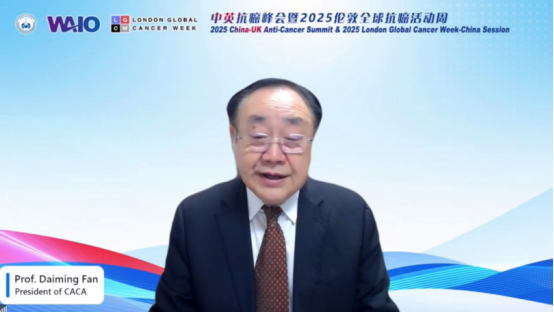
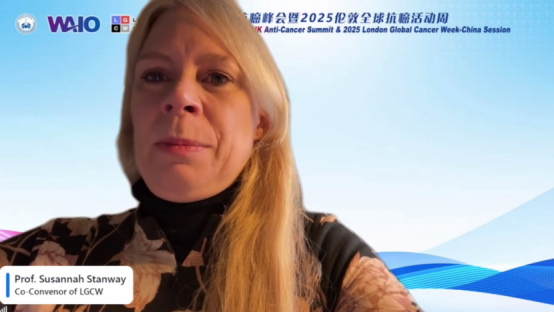
We were honored to have the President of CACA, Prof. Fan Daiming, and Dr. Susannah Stanway, a Co-Convenor of the London Global Cancer Week, give the opening remarks for this summit.
We also had keynote reports from four top experts from China and the UK in the field of cancer. They are: Prof. Li Yue from the First Affiliated Hospital of Harbin Medical University, Prof. Shi Qiuling from Chongqing Medical University, Dr. Alexander Lyon, Past President of the British Cardio-Oncology Society, and Dr. Nicolo Battisti, Past President of the International Society of Geriatric Oncology.
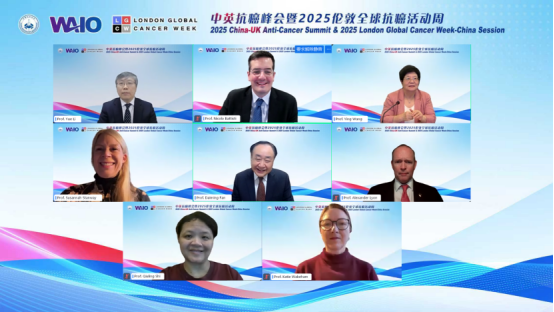
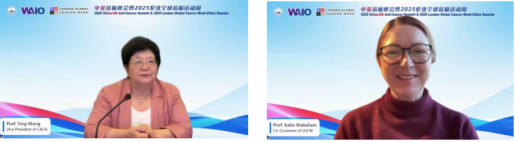
The conference was jointly chaired by Prof. Wang Ying, Vice President of the CACA, and Dr. Katie Wakeham, a Co-Convenor of the London Global Cancer Week.
Opening Remarks
In his opening speech, Prof. Fan Daiming, President of CACA, WAIO, and Asian Oncology Society (AOS), pointed out this summit marks an important milestone in cooperation between China and the UK in the field of cancer prevention and control. He expressed his hope that this summit would further solidify long-term bilateral cooperation and jointly contribute wisdom and strength to global cancer prevention and control. In addition, Prof. Fan elaborated on the core concept of "Integrative Oncology," first proposed by CACA. He emphasized that the concept of integrative oncology is committed to shifting medicine from "evidence-based medicine" to "inquiry-based medicine," and the concept of cancer diagnosis and treatment should also transition from traditional "anti-cancer" to "tumor control" and "patient preservation." Finally, Prof. Fan introduced that CACA, as China's largest anti-cancer organization with over 850,000 members, has put this concept into practice by hosting the Chinese Congress of Holistic Integrative Oncology (CCHIO) and a series of international summits, significantly improving cancer prevention and control levels in China.
Dr. Susannah Stanway, Co-Convenor of the LGCW and Honorary Consultant in Breast Medicine at the Royal Marsden Hospital in the UK, emphasized that in the face of millions of new cancer cases worldwide each year, it is essential to address this challenge through international collaboration and multidisciplinary dialogue. She pointed out that practicing the concept of "integrative diagnosis and treatment" is crucial, focusing on prevention and early screening, optimizing treatment based on evidence-based medicine, and promoting broad cooperation from all sectors of society. As human life expectancy increases, attention to interdisciplinary fields such as geriatric oncology and cardio-oncology has become a common global challenge and goal to provide safer and more effective diagnosis and treatment for patients. Dr. Stanway looks forward to providing safer and more effective full-cycle diagnosis and treatment plans for patients through global collaboration.
Keynote Speeches
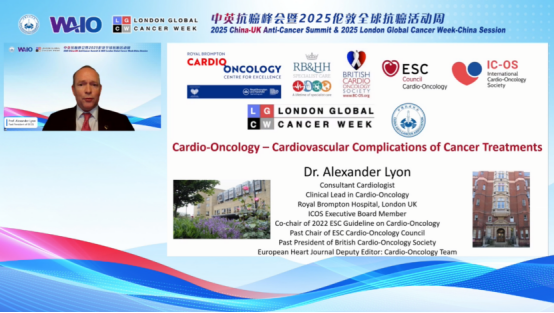
In the keynote speech session, Dr. Alexander Lyon, Head of the Cardio-Oncology service at the Royal Brompton Hospital, Executive Board Member of International Cardio-Oncology Society, and Past President of the British Cardio-Oncology Society, introduced "Cardio-Oncology - Cardiovascular Complications of Cancer Treatments". In his lecture, he pointed out that as cancer treatment methods advance and patient survival periods extend, treatment-related cardiovascular complications have become increasingly prominent, leading to the emergence of a new interdisciplinary field—cardio-oncology. Various chemotherapy, targeted therapy, and immunotherapy treatments carry potential cardiovascular toxicity, which can lead to risks such as heart failure, hypertension, and arrhythmias. He emphasized the importance of conducting baseline cardiovascular risk assessments and continuous monitoring for cancer patients. To this end, the international academic community has released relevant guidelines and introduced various risk assessment tools aimed at promoting collaboration between cardiologists and oncologists to jointly manage patient risks, optimize treatment plans, and improve the long-term quality of life and prognosis of cancer patients.
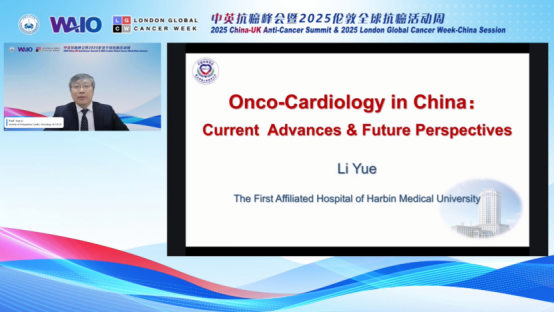
Prof. Li Yue, Chair of the Interventional Cardiology Council of Asian Heart Society, Past President of the Society of Integrative Cardio-Oncology of CACA, and Member of the Standing Committee of Chinese Society of Cardiology, presented on "Cardio-Oncology in China: Current Advances & Future Perspectives". Prof. Li pointed out that significant progress has been made in the field of cardio-oncology in China in recent years: a specialized diagnosis and treatment system has been established, and the first "Chinese Cardio-Oncology Guidelines" have been released. In terms of research, Prof. Li's team has revealed the deep-seated mechanisms of the bidirectional impact between tumors and cardiovascular diseases. On one hand, anti-tumor treatments can cause cardiovascular and cerebrovascular damage; on the other hand, cardiovascular diseases such as heart failure and atrial fibrillation significantly increase the risk of cancer. Research has also found that common factors such as gut microbiota and circadian rhythms play important roles in the occurrence of both types of diseases. Looking to the future, Prof. Li proposed four key development directions: establishing a specialized diagnosis and treatment network nationwide, promoting the deep integration of basic and clinical research, exploring the unique value of traditional Chinese medicine in this field, and actively applying artificial intelligence technology. He emphasized that through the integrative medicine model and international cooperation, the emerging interdisciplinary field of cardio-oncology is poised for important breakthroughs.
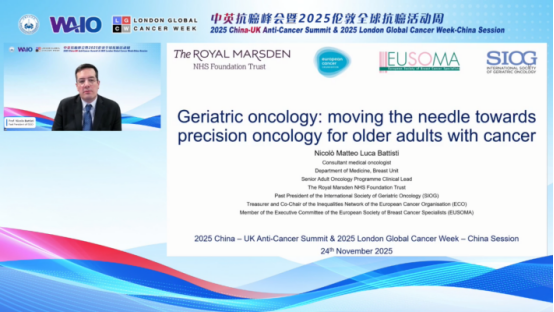
Dr. Nicolo Battisti, Past President of the International Society of Geriatric Oncology and Consultant Medical Oncologist in the Breast Unit of The Royal Marsden, London, UK, delivered a keynote speech titled "Geriatric Oncology: Moving the Needle towards Precision Oncology for Older Adults with Cancer". Dr. Battisti systematically elaborated on the new paradigm of precision medicine in geriatric oncology. He pointed out that in the face of the significant increase in the number of older cancer patients globally, traditional treatment models based solely on age can no longer meet clinical needs. Therefore, Dr. Battisti emphasized the importance of using comprehensive geriatric assessment systems to achieve precise patient stratification across multiple dimensions, including physiological function, comorbidities, cognitive status, and social support. This assessment model can effectively reduce the incidence of severe adverse events by 30% and significantly improve patients' quality of life. Currently, international authoritative organizations have released a series of assessment tools and clinical guidelines, and establishing multidisciplinary collaboration mechanisms has become key. In the future, it will be necessary to further strengthen professional training and promote the deep application of precision medicine concepts in the field of geriatric oncology to provide truly individualized treatment plans for this special population.
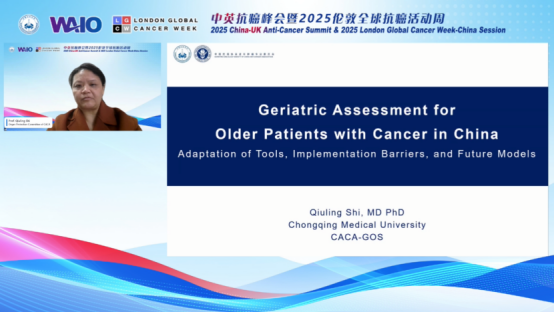
Prof. Shi Qiuling from the Department of Epidemiology at the School of Public Health, Chongqing Medical University, and Director of Geriatric Oncology Committee of CACA, shared insights on "Geriatric Assessment for Older Patients with Cancer in China: Adaptation of Tools, Implementation Barriers, and Future Models". In her lecture, Prof. Shi systematically explained the adaptability and implementation pathways of comprehensive assessment tools for older cancer patients in China. The CACA Geriatric Oncology Committee has localized the internationally used G8 screening tool, developing a self-rated sG8 scale more suitable for China's context, effectively reducing the assessment burden for both doctors and patients. Additionally, to address current barriers in clinical practice, the CACA Geriatric Oncology Committee has developed a clear future roadmap, focusing on building a standardized workflow that includes rapid screening, precise triage, in-depth assessment of abnormal areas, and multidisciplinary team intervention. This aims to provide older cancer patients with truly integrated and individualized high-quality diagnosis and treatment services.
Panel Discussion
The panel discussion focused on the positioning of cardio-oncology as a discipline and interdisciplinary collaboration. Prof. Fan Daiming initiated the discussion by exploring the naming of the discipline, emphasizing that the term "Onco-cardiology" more accurately reflects the essence of the discipline, which is "heart problems caused by cancer treatment." Dr. Nicolo Battisti and Prof. Li Yue both agreed with this view. From the perspective of geriatric oncology, they pointed out that the naming of the discipline should emphasize the connection between cancer treatment and organ protection, a viewpoint highly consistent with the concept of integrative oncology. Prof. Shi Qiuling then introduced the achievements of the CACA Geriatric Oncology Committee in promoting standardized assessment processes.
The discussion further delved into specific clinical challenges. In response to the new trend of increased cardiac toxicity caused by radiotherapy combined with immunotherapy, the experts unanimously agreed on the necessity of strengthening deep collaboration between oncology and cardiology departments. Prof. Fan particularly emphasized that modern cancer treatment must balance local efficacy with systemic impacts and establish systematic organ protection strategies.
This summit brought together top minds in the field of cancer prevention and treatment from China and the UK, reaching important consensus in key areas such as integrative oncology, cardio-oncology, and geriatric oncology. The meeting injected new momentum into the high-quality development of global cancer prevention and treatment efforts and made positive contributions to building a global community of health for all. The participating experts unanimously look forward to using this summit as a new starting point to further deepen practical cooperation between China and the UK in the field of cancer prevention and treatment, jointly bringing more benefits to cancer patients worldwide.

